
The confectionery standard
Good candy.
Thoughtfully made.
Properly kept.
A closer look at confectionery quality standards, candy ingredient transparency, and the everyday care that protects a lovely texture.
Last updated
01 / What to look for
Quality, beyond the pretty wrapper.
Our standards are editorial criteria for comparing artisan confectionery. They are questions to bring to a confectioner—not a certification or laboratory assessment of the illustrated profiles.
- Ingredients with a clear identity
- Look for a readable ingredient statement and a maker who can explain the role of butter, cream, cane sugar, nuts, flavorings, and pure maple syrup where used. Simple language is more useful than an unsupported premium label.
- A texture that suits the style
- Caramels should match their intended chew; toffee its intended snap; maple creams their fine-grained texture. Temperature affects how these feel, so compare under the maker’s recommended serving conditions.
- A balanced flavor profile
- Notice the relationship among sweetness, acidity, salt, bitterness, and aroma. The best match is a matter of preference, not a universal ranking. Our candy tasting notes give you a vocabulary for the comparison.
- A method the maker can describe
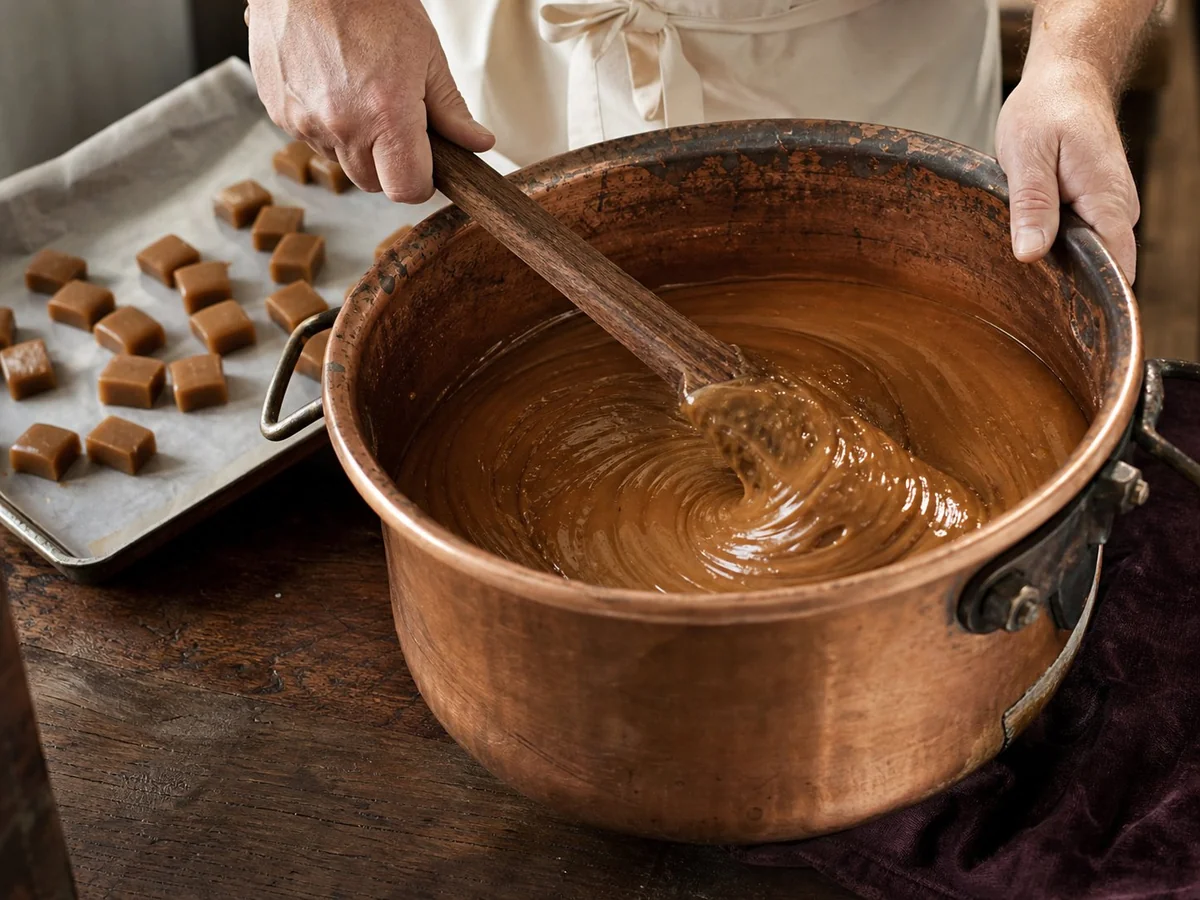
- Ask which steps are performed by hand, how batches are identified, and how the maker monitors consistency. Copper kettle candy is a style cue; the vessel alone does not establish quality or origin.
- Wrapping suited to the confection
- Hand-wrapped caramels benefit from separation; delicate ribbons need protection from pressure and humidity. Look for intact food-safe packaging and clear storage instructions that suit the actual recipe.
- Specific, verifiable information
- Check the actual ingredient label, allergen statement, best-by date, and maker details. Ask about shared equipment when relevant. Nostalgic packaging and attractive photography cannot substitute for this information.
02 / Artisan candy storage
Keep the character you came for.
In general, choose a cool, dry place away from direct sun, heat, and strong odors. The actual package instructions and the maker’s best-by date take priority; storage life varies with ingredients, moisture, and packaging.
| Confection | Pay particular attention to | A useful handling habit |
|---|---|---|
| Soft caramels | Warmth, sticking, and exposed cut surfaces | Keep individually wrapped; follow the maker’s temperature guidance. |
| Almond butter toffee | Humidity and warmth around chocolate | Reseal the package promptly and avoid warm windowsills. |
| Saltwater taffy | Temperature-dependent softness or firmness | Keep wrapped and let it reach the recommended serving temperature. |
| Lemon drops | Moisture that makes hard candy sticky | Use a dry, tightly closed container and a dry serving dish. |
| Maple creams | Drying, moisture changes, and recipe variation | Retain the original protective packaging and follow the maker’s label. |
| Ribbon candy | Fragile folds, pressure, and humidity | Store with gentle separation and protect from crushing. |
Refrigeration can introduce condensation when a package is opened. Use it only when the maker recommends it, and follow their instructions for bringing the candy to serving temperature.
03 / A thoughtful little ritual
From the wrapper to the table.
-
Read before serving
Check ingredients, the best-by date, package condition, and any serving cautions. Keep the label available for guests.
-
Set out a small portion
Use a clean, dry dish. Keep the remaining candies protected in their original packaging.
-
Keep the flavors distinct
Separate peppermint from more delicate maple or vanilla notes. Offer wrapped pieces where practical.
-
Put the rest away
Reseal promptly and return to the maker’s recommended storage conditions. Keep hard candies appropriate to the people you are serving.
A careful word on allergens
Milk and almonds are common in caramel and toffee styles; chocolate may contain milk or soy, and taffy recipes may include milk or egg. Recipes vary, including for maple creams. For candy allergen guidance, rely on the actual label and the maker’s cross-contact information. Never infer suitability from a profile name or photograph.
Put a little knowledge to good use